The Chefs Making Regional Asian Food Impossible to Ignore
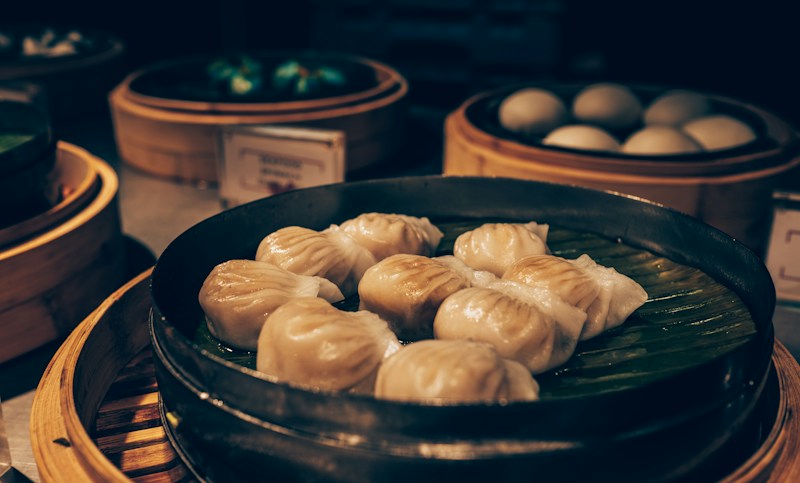
From Penang to Chengdu, a new generation of chefs is refusing to let regional cuisines be flattened into continental clichés.
The problem with “Asian food” as a category is that it describes approximately as much as “European food” — which is to say, almost nothing useful. The distance between a bowl of Penang assam laksa and a plate of Xinjiang hand-pulled noodles is roughly equivalent to the distance between a Neapolitan pizza and a Scandinavian smørrebrød.
A generation of chefs across Asia is making it their mission to make this obvious.
Zoe Tan, Penang
Zoe Tan runs a twelve-seat restaurant in George Town that books out three months in advance. The menu changes completely every week. Everything on it is Penang — not “Malaysian,” not “Southeast Asian,” but specifically, granularly Penang.
“Penang has a food culture that is unlike anywhere else in the world,” she says. “The Straits Chinese cooking, the Indian Muslim influences, the Hokkien foundations — it’s extraordinarily complex. I could cook here for my whole life and not run out of material.”
Her most talked-about dish this year was a version of rojak using twelve heritage varieties of tropical fruit sourced from farms within fifty kilometres of the restaurant. The dish took three years of relationships with farmers to make possible.
Wei Jiaming, Chengdu
Sichuan food is perhaps the most internationally recognised of China’s regional cuisines, which is both a blessing and a problem for Wei Jiaming. The problem: visitors come with fixed ideas about what Sichuan food is.
“Everyone knows mala,” he says. “But Sichuan has twenty-four recognised flavour profiles. Mala is one of them. The other twenty-three are almost invisible internationally.”
His restaurant dedicates one section of the menu each season to a single non-mala flavour profile — an act of culinary education disguised as a tasting menu.
Farah Ibrahim, Kuala Lumpur
Farah Ibrahim trained at Le Cordon Bleu in Paris before concluding, somewhat dramatically, that she had learned the wrong things.
“I learned technique,” she says. “French technique, which is extraordinary. But it gave me the wrong framework for thinking about Malaysian food. Malaysian cooking is about the rempah — the spice paste, the foundation, the thing that takes two hours to fry correctly and that you cannot shortcut.”
Her restaurant specialises in the cooking of her grandmother’s generation — kampung food, the everyday domestic cooking of rural Malaysia that has been largely displaced by fast food and simplified restaurant versions. She employs three cooks whose sole job is making rempah.
What connects these chefs is a refusal of the idea that regional specificity is a limitation. The more precisely located the food, the more it has to say.